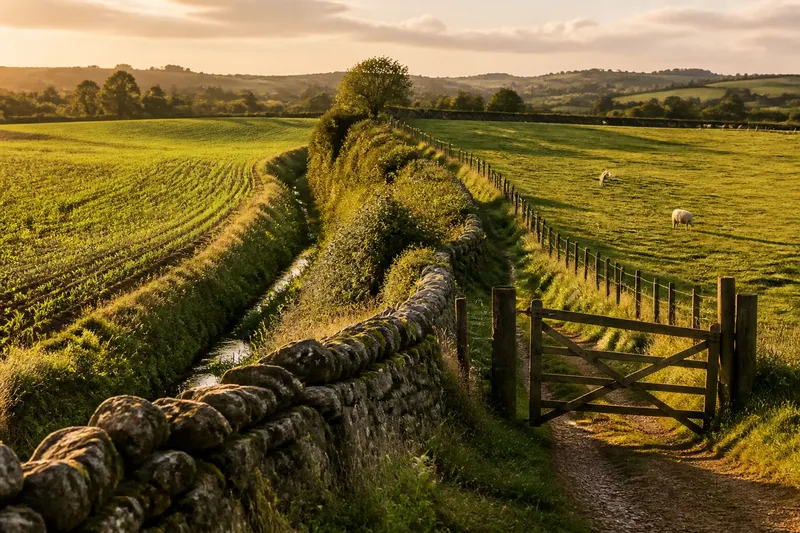
The Countryside Is Not a Backdrop
The countryside is not a backdrop: learn to read rural paths through residents’ needs, workers’ access and visitors’ choices, without losing the pleasure of a walk.
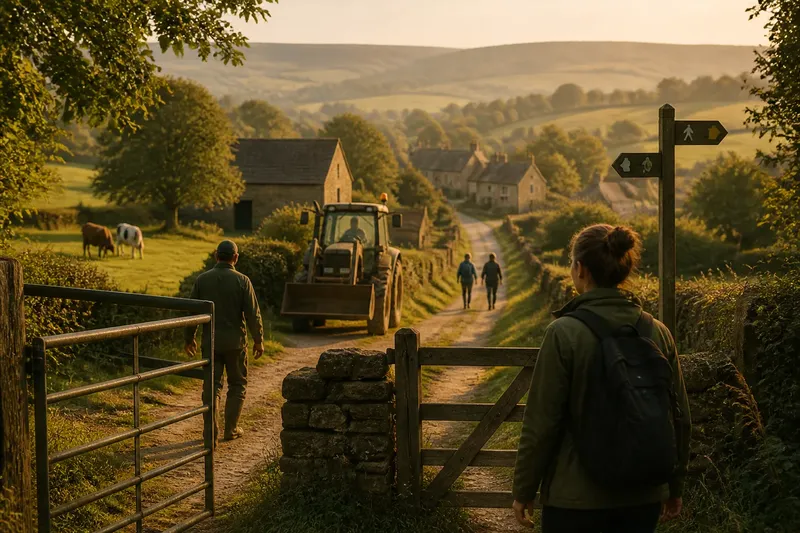
The most common mistake on a country walk is treating the countryside as scenery, and the cost is missing the people whose homes, work and routes make that view possible. The countryside is not a backdrop: the same lane may be a resident’s way to the shop, a worker’s route between fields and a visitor’s inviting detour. What you notice depends on why you are there.
That does not make walking less pleasurable. It makes the landscape more legible. A gate can be an entrance to a working day as well as a picturesque frame; a quiet road can be a necessary connection rather than an empty stretch. Start with the route in front of you, then let its practical details sharpen what you see.
Choose your starting point
Begin with your situation, not with a theory about rural life. You might live nearby, be walking through for leisure, or be visiting someone whose day depends on the land. Each position brings different knowledge and different blind spots.
- If you live here: notice which paths connect homes to services. If a route is blocked or traffic narrows the road, consider whether it changes everyday access; if it does, identify a safer alternative or raise the issue through an appropriate local channel.
- If you are visiting for leisure: look for signs of active use, such as vehicle tracks, stacked materials or animals in a field. If people are working nearby, give them room; if the route is shared, pause in a safe place and let them pass.
- If you are here for work or a visit: identify the practical purpose of your journey. If a field entrance, yard or stopping place is needed for access, keep it clear; if you are unsure whether a space is public, use a clearly marked route or ask locally.
These are not fixed identities. A resident may be out for a ramble; a visitor may know the area well; someone working outdoors may also be passing through a place they love. Choose the perspective that fits this walk, and change it when the evidence on the ground suggests another.
Residents’ everyday routes
For a resident, a landscape is often a network of useful places. A lane joins a house to a bus stop; a footpath offers a way to reach a neighbour; a stream crossing becomes a familiar landmark. The view matters, but so does the route through it.
Notice what makes a route usable. Is the pavement continuous, or does a person on foot need to share a narrow road with vehicles? Does a gate leave room for someone using a mobility aid, or does a stile make the path inaccessible? Is a bridge a direct connection, or does its absence turn a short journey into a long detour?
These details can reveal how community life is arranged without reducing a place to a list of problems. A bench near a village green may support a pause and a conversation. A well-used verge may be a walking route for people whose homes lie beyond the centre. Ask what the landscape helps people do, not only what it looks like from a favourite viewpoint.
Outdoor work and access
For people working in the countryside, land is not an uninterrupted view. It is a set of tasks, timings and access points. A tractor needs room to turn; a delivery vehicle may need to reach a yard; a person tending livestock may need to keep a gate closed behind them.
Visitors sometimes read machinery or temporary barriers as interruptions to a peaceful scene. A worker may see necessary equipment or a practical response to conditions. Neither perspective tells the whole story on its own: the work is part of the landscape, while the effect on nearby routes and residents matters too.
On a walk, look for signs of labour without assuming you know the whole job. Mud on a track, a maintained hedge or materials stored beside a building can prompt a question about what keeps the place functioning. If you meet someone at work, give them room and avoid turning their task into an invitation to stop, photograph or chat.
Leisure walks and shared paths
If you came for a walk, it is reasonable to value quiet, open views and a change of pace. The useful shift is not to give up that enjoyment but to see the view as one layer of a lived landscape. A field may be beautiful to cross in the distance and still be a workplace, a habitat and someone’s responsibility.
Follow route information at the path entrance or on an Ordnance Survey map, and treat signs on the ground as part of the walk rather than distractions from it. Keep to the marked path where required, shut gates as directed and take litter away. If a route passes close to homes or working yards, lower your voice and avoid wandering into private spaces for a better photograph.
Say you have planned a circular walk that crosses a farm track and reaches a village shop. You see a gate open, a vehicle approaching and a sign asking walkers to keep to the path. Pause somewhere safely out of the way, follow the signed route and let the vehicle pass; the worker can continue without manoeuvring around you, and you can carry on without entering a work area.
Purposeful visits and local connections
Not every visitor is there to admire the view. You may be travelling to a family home, attending an appointment or helping someone with a practical task. In that situation, the landscape can be both a place of personal meaning and a set of routes that must work.
Notice how buildings, paths and services relate to one another. A village hall may sit beyond a narrow road; a shop may be the only place to pick up an everyday item nearby. Those connections can make the countryside feel close-knit, but access may depend on a car, a lift from someone else or a route that is comfortable to walk.
For a purposeful visit, choose the route that is clear and suitable for your needs rather than the one that looks most scenic on a map. If the journey is unfamiliar, check local signs and ask the person you are visiting about access or parking. That small conversation can prevent a lane, yard or private drive from becoming an accidental shortcut.
Reading paths and signs clearly
What does a gate tell me?
It may mark a boundary, protect animals or manage access, but its meaning depends on the signs and the path around it. Follow posted directions, and leave the gate as you find it unless instructions say otherwise.
How can I tell if a track is working access?
Vehicle marks, equipment, buildings or signs can suggest active use, though none alone explains the full situation. Stay on the public route and give way where the path is shared or signed for that purpose.
Should I photograph people at work?
Ask permission before making someone the subject of a photograph, especially when they are busy or near their home. A landscape image can often include traces of work without putting a person on display.
What if the path feels unclear?
Pause and check a local sign or reliable map instead of guessing across a field or yard. If access remains uncertain, choose a clearly marked route and seek local advice before returning.
Keep the view human
A landscape becomes easier to understand when you look for relationships: where a path meets a road, where work meets access, and where a public route passes near someone’s home. These are everyday arrangements you can notice while leaving room for what you do not know.
On your next walk, carry one practical question: who uses this route, what does it connect, or what work is happening just beyond the view? The countryside is not a backdrop, and seeing it that way does not require special expertise. Enjoy the scene while recognising that someone else may be living, working or travelling through it at the same time.